Why You Shouldn't Store Crypto on an Exchange
You bought bitcoin on an exchange and left it there — seems logical, like money in a bank. But crypto on an exchange doesn't work like a bank deposit. It's more like money in someone else's pocket.
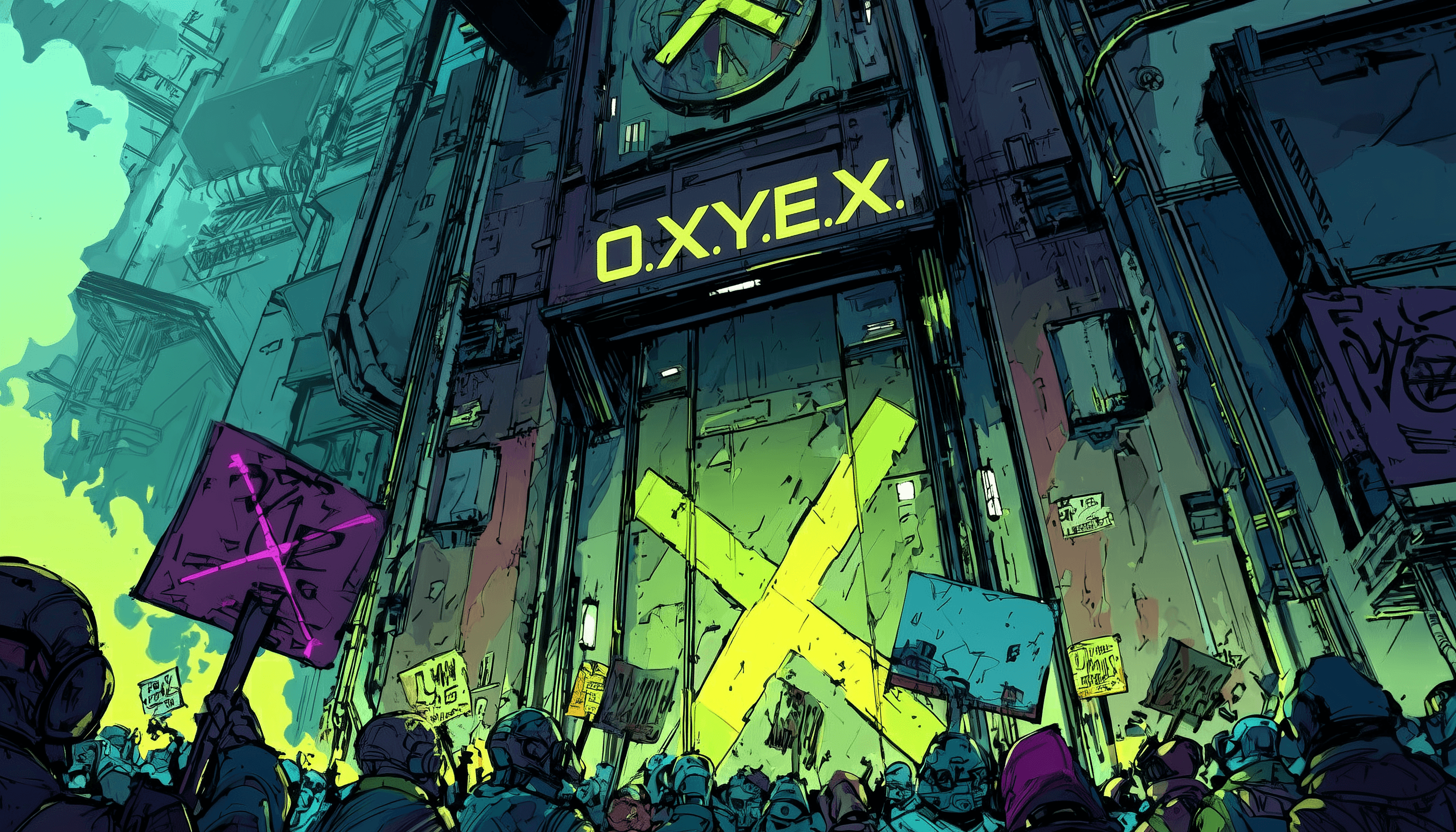
Exchanges are convenient for buying, but dangerous for long-term storage — they control your coins, not you.
Ownership
When you "store crypto on an exchange," your coins aren't technically in your account. Instead, they sit in the exchange's shared wallet. The exchange controls the private keys — digital "passwords" that provide access to your coins. You only control your account login and password.
This works like money in PayPal. You see a €500 balance, but you can't directly control those funds. PayPal can freeze your account, block transfers, or demand additional verification. Exchanges work the same way.
The difference between custodial storage (exchange) and non-custodial storage (your own wallet) comes down to control. With custodial storage, you trust a third party with your keys. With non-custodial storage, you maintain control yourself. Crypto follows the principle: "not your keys, not your coins."
Key takeaway: If you don't have a seed phrase of 12-24 words, the coins aren't technically yours.
Risks
Risk | What happens | Real example | Can you recover? |
|---|---|---|---|
Exchange bankruptcy | Exchange shuts down, assets frozen | FTX 2022: $8 billion lost, recovery through courts 2-5 years | Partially, after years |
Exchange hack | Hackers steal coins from hot wallet | DMM Bitcoin lost $305 million in May 2024 | Rarely, depends on insurance |
Account blocked | Suspected violations, KYC errors, sanctions | Thousands of complaints about freezes without explanation | Weeks or months of disputes |
Exchange blocked | Exchange exits market / government blocks access | Binance completely left Russia in 2023 | No, if you didn't withdraw in time |
Account hacked | Phishing, password leaks, SIM-swap | Theft through fake websites and phishing is common | Unlikely |
Risk frequency: bankruptcy is rare but devastating; hacks saw $2.2 billion stolen in 2024; account blocks happen moderately often; exchange blocks depend on jurisdiction; phishing happens daily.
Key takeaway: even major exchanges can collapse — FTX was the world's third-largest exchange before its downfall.
Exceptions
Using an exchange is fine if the amount is small for you. Rule of thumb: losing a month's income or less isn't critical. If you're holding €300 with a €2,000 salary, you can keep it on the exchange for convenience.
Active trading or plans to sell in the coming weeks are logical reasons to keep funds on an exchange. Constant transfers back and forth will eat up fees and time.
If you haven't figured out wallets yet and worry about making mistakes during withdrawal, keeping funds on an exchange is temporarily acceptable. But this should be short-term: learn while you wait.
A large, regulated exchange with history provides additional protection. Coinbase has operated since 2012 without bankruptcy, Kraken since 2011. But size doesn't guarantee security.
Key takeaway: exchanges trade convenience for control. If your holdings are growing or you've held for more than 3 months, it's time to withdraw.
When to Withdraw
Always withdraw if the amount is significant — more than your monthly income or an amount you'd hate to lose.
Psychology test: if losing €1,000 would ruin your month, withdraw it.
Long-term storage over 6 months doesn't belong on an exchange. The probability of problems accumulates over time: hacks, account freezes, and technical failures.
Small or new exchanges without EU licenses are red flags. Check: has it operated for more than 3 years, is it regulated, does it have many users?
If you live in a jurisdiction at risk of blockades, exercise special caution. In Russia, Coinbase is blocked by sanctions and Kraken is unavailable. Belarus faces the risk of expanded sanctions.
Key takeaway: if you're afraid to lose it or planning to hold long-term, withdraw to your own wallet.
Common Mistakes
Mistake | Consequence | Correct Approach |
|---|---|---|
Keeping all crypto on one exchange | If the exchange fails — you lose everything | Diversify: some on exchange, some in wallet |
Using SMS for two-factor authentication | Hacking through SIM-swap attacks, number spoofing | Google Authenticator or Authy |
Ignoring suspicious activity emails | Exchange will block you without warning | Check logins immediately, change password |
Saving passwords in browser or phone notes | Stolen phone = access to your exchange | Password manager: Bitwarden, 1Password |
The most common mistake is a false sense of security. "The exchange is big, nothing will happen to me" — that's what FTX clients thought before November 2022.
The second mistake is postponing wallet education. "I'll figure it out later" turns into months of risk. Better to spend an hour learning than lose everything.
Key takeaway: backup plans and education matter more than convenience.
Actions
Portfolio Under €1,000
For Bitcoin — use Exodus on your phone. For other coins — use MetaMask. Withdraw once a month as your balance grows. Fees range from €1-8 depending on network congestion — this is reasonable for amounts of €500+.
Portfolio €1,000-10,000
Get a hardware wallet like Ledger or Trezor. Withdraw when your balance grows by 50% or every 3 months. Ethereum fees run €5-15 — for these amounts, that's less than 1%.
Portfolio €10,000+
A hardware wallet is mandatory. Never keep more than €5,000 on an exchange at once. The math: with a €20 fee on a €15,000 portfolio, you're paying just 0.13% — pocket change for complete control.
Universal plan for everyone:
Step 1: Assess your exchange balance using the categories above.
Step 2: Enable two-factor authentication in your exchange's Security settings. This takes 3 minutes and prevents 90% of account hacks. I recommend Proton Pass, or Google Authenticator as a last resort.
Step 3: Choose a wallet from the recommendations above. Setup takes 2 minutes.
Step 4: Write down your wallet's seed phrase on paper and hide it somewhere safe. No photos, no cloud storage — paper only.
Step 5: Test by withdrawing €10-20 from the exchange to your wallet. Takes 5 minutes plus network confirmation time.
Key takeaway: If the test works — withdraw your main amount according to your category's plan. If you're nervous — study more, but don't delay indefinitely.
Questions
Coinbase and Kraken are huge — they won't go bankrupt, right? FTX was the world's second-largest exchange with a million users. It collapsed in 3 days in November 2022. Size isn't a guarantee.
If I lose my phone with my wallet, do I lose everything? Only if you didn't write down your seed phrase. With that 12-24 word phrase, you can restore your wallet on any device.
The exchange is insured — they'll return my money, right? In the EU, insurance covers fiat funds (euros in your balance) but not cryptocurrencies. Always read the fine print.
Withdrawals are expensive — €10-20 in fees! Check the calculation above in the "Actions" section. For amounts over €500, this is a reasonable price for control. For amounts under €200, you might wait until your balance grows.
Key takeaway: every "but" has a solution — the important thing is not to delay.
Exchanges are convenient tools for buying and trading, but they're poor places for long-term storage. Withdraw significant amounts to your own wallet and control your assets yourself.
Disclaimer: This article is for informational purposes only and is not a financial recommendation. Cryptocurrency investments carry high risks. Always conduct your own research and consult with financial advisors before making investment decisions.
Updated: