What is a crypto ATM and when should you use it
You've seen Bitcoin ATMs everywhere but wonder if they're worth the fees. We tested one with and reveal the true costs—plus when the premium makes sense.
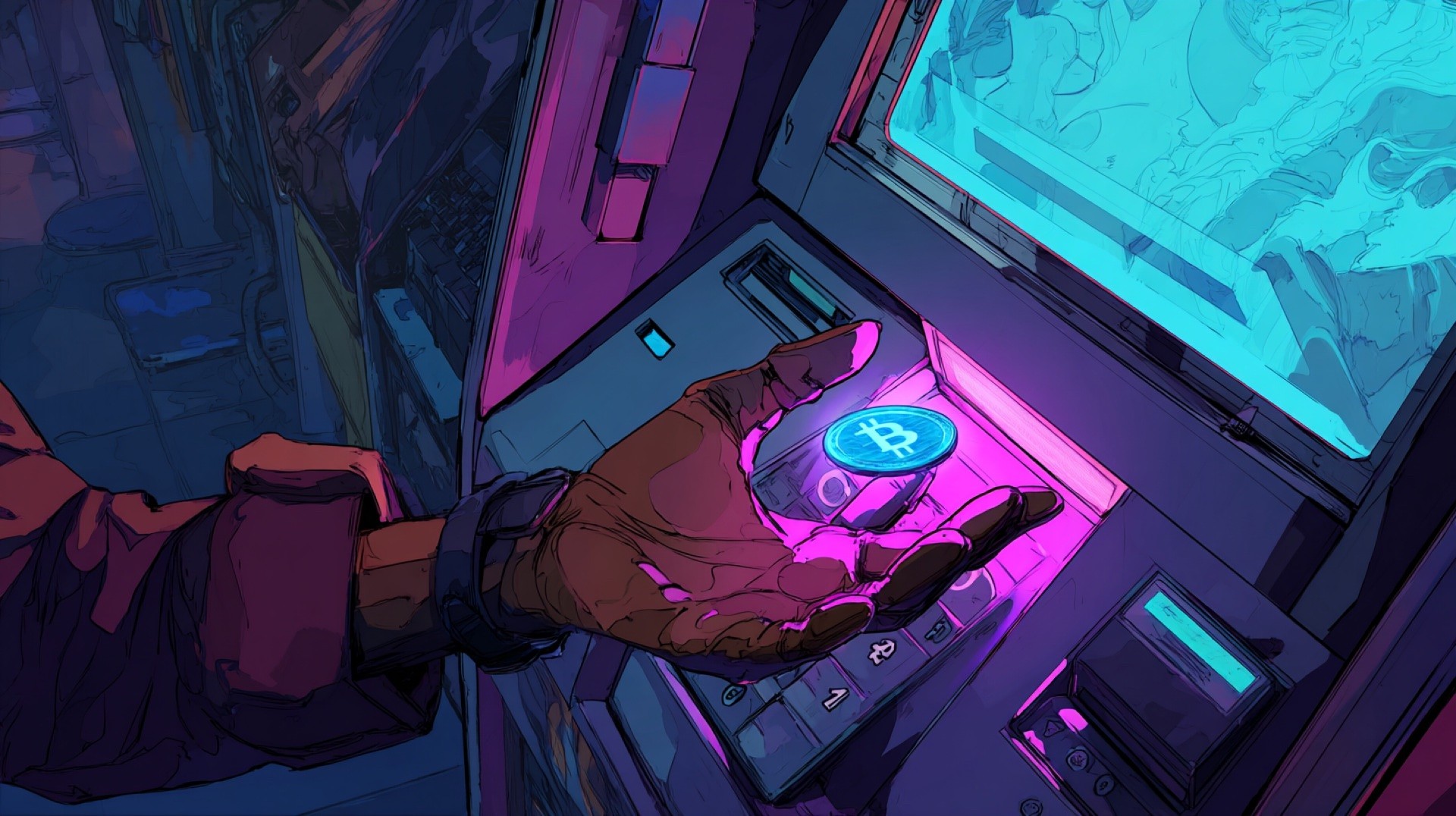
Crypto ATMs charge 8-20% fees where offline exchangers take 1-5%. We break down how the terminal works, what it really costs to exchange €100 in cash, and when such overpayment is still justified.
How does a crypto ATM work and how is it different from a regular ATM?
A crypto ATM looks like a regular ATM — same screen, keyboard, and bill acceptor. The difference is that instead of a bank card, you use a QR code from your crypto wallet. The machine shows the Bitcoin or Ethereum rate, you insert cash, scan your wallet's QR code — and crypto arrives in 10-30 minutes.
They support Bitcoin, Ethereum, and Litecoin. Advanced models accept USDT and Dogecoin. Two-way machines can dispense cash for crypto — about a third of all units.
They're installed in shopping centers, airports, and 24-hour cafes. Around 3,200 devices operate in the EU, with the most in Spain and Poland.
Key takeaway: a crypto ATM is a premium-priced ATM for crypto that charges for convenience.
What does it really cost to exchange €100 through a crypto ATM?
Buy Bitcoin for €100 at a crypto ATM — you'll get €85-90 worth of crypto. The rest is eaten by 8-20% fees plus hidden spread.
The cost structure looks like this: operator fee 5-12%, spread between market rate and machine rate 3-5%, blockchain fee €2-5. Total: €15-20 per hundred euros.
Compare with alternatives: a major exchange charges 0.1% for buying Bitcoin with a card (€0.10 per €100), plus 1-3% bank fee. Total: €1.10-3.10. Offline exchangers work with 1-5% fees, meaning €1-5 from the same amount.
Key takeaway: crypto ATMs cost 5-10 times more than exchanges due to the convenience of getting crypto right now.
Do you need a passport and what are the limits?
Since September 2025, there are no anonymous operations at EU crypto ATMs. Full verification is required regardless of amount: scan your passport, enter phone number, take a selfie.
Previously, you could exchange up to €990 without documents, but MiCA regulation changed the rules. Now operators must collect client data for any transactions.
Each operator sets limits independently. Typically: minimum €20-50, maximum depends on company policy. Operations over €10,000 may require extended verification.
The procedure takes 5-10 minutes on first use. Repeat operations with some operators go faster — the machine remembers verified users.
Key takeaway: full KYC is mandatory for all operations, regardless of amount.
In what situations is the overpayment justified?
Crypto ATMs make sense in two cases: you urgently need cash from crypto or vice versa — buy Bitcoin for cash right now.
For example, you're on vacation, your card is blocked, and all your money is in a crypto wallet. The nearest two-way machine will help you get cash in 15 minutes, albeit with a 10-15% fee.
The second scenario is urgent crypto purchase with cash when exchanges are unavailable or you don't have time for registration and verification.
For planned exchanges, crypto ATMs are unjustifiably expensive — better use an exchange, full-service exchanger, or P2P platform.
Key takeaway: crypto ATMs are emergency exchange services, not tools for regular operations.
Which method should I choose in my situation?
Method | When to use | Risk | Approximate fee |
|---|---|---|---|
Centralized exchange | Need speed, convenient interface | Exchange storage, blocking | 0.1–1% per trade + withdrawal |
P2P platform | Exchanges unavailable but need online exchange | Fraudulent seller, arbitration | 0–1% to platform + spread |
Crypto ATM | Urgently need to exchange cash for crypto and back | Up to 20% fee, limits | 8–20% |
Offline exchangers | Need to exchange cash for crypto and back, but need better conditions than crypto ATM | Physical security if not using official offices | 1–5% |
For non-urgent cash operations, choose a regular offline exchanger. Crypto Navigator is a catalog of offline exchangers that includes 730+ verified exchangers in 100+ cities. Convenient for finding an exchanger near home.
Key takeaway: crypto ATMs are a last resort when time matters more than money.
How to conduct an operation without errors?
Preparation: install a crypto wallet (Trust Wallet, MetaMask), bring your passport, prepare cash or make sure crypto is already in your wallet.
Buying crypto:
Select cryptocurrency on the machine screen
Enter amount or quantity of crypto
Scan passport for verification
Show your wallet's QR code to the machine's camera
Insert cash into the bill acceptor
Confirm the operation on screen
Selling crypto:
Select "Sell" and cryptocurrency
Enter amount to receive in cash
Complete verification
Send crypto to the address shown by the machine
Wait for blockchain confirmation
Collect cash from the dispenser
Common mistakes: wrong wallet address, sending crypto on wrong network (e.g., USDT on Ethereum instead of Tron), trying to cancel operation after sending crypto.
Check the address twice — recovering crypto sent to the wrong place is practically impossible.
Key takeaway: the main thing is the correct wallet address and patience when waiting for confirmations.
FAQ
Is it safe to use crypto ATMs? Yes, if the operator has a license. Risk of losing funds is minimal, but fees are high.
What if the crypto ATM ate my money? Contact the operator's support service — the number is listed on the machine. Operations are recorded, funds should be returned.
Do crypto ATMs work 24/7? Most do, especially in shopping centers and airports. Operating hours are indicated on the machine body.
Do I need to pay taxes on operations? Yes, according to your country's tax legislation. MiCA reporting applies in the EU, consult with a tax advisor.
What's the minimum exchange amount? Usually €20-50. Maximum depends on the operator and may require additional verification for large amounts.
Conclusion
Crypto ATMs are only suitable for emergency crypto-to-cash exchanges when time is critical. In all other cases, use exchanges and exchangers — they're 5-10 times cheaper.
*Disclaimer: This article is for informational purposes only and is not a financial recommendation. Cryptocurrency investments carry high risks. Always conduct your own research and consult with financial advisors before making investment decisions.
Updated: