What is Blockchain: A Beginner's Guide
Have you heard about blockchain from the news about Bitcoin, but don't understand how a digital record can be more reliable than a bank? Let's break it down in simple terms, without technical jargon.
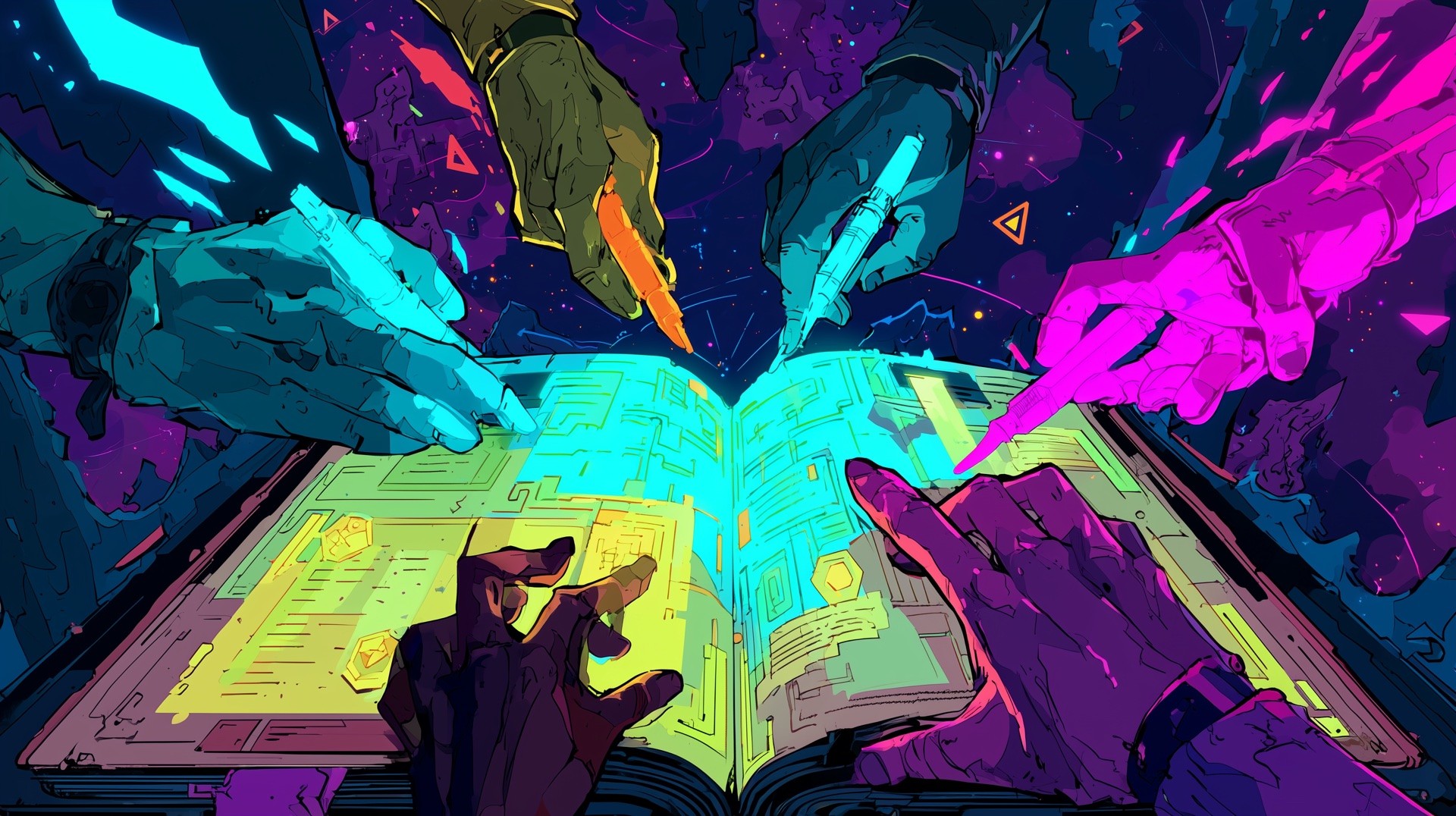
Blockchain is a shared digital ledger where all records are visible to everyone and cannot be erased.
Definition
Blockchain is a digital ledger whose copies are stored by thousands of people simultaneously. Its key feature: if someone tries to alter a record in their copy, other participants immediately spot the fraud.
All records are public — anyone can view the transaction history. You can't delete or retroactively change old entries; you can only add new ones.
Key takeaway: blockchain prevents fraud through multiple copies held by different people.
Analogy
Imagine a shared notebook in an office where colleagues record debts to each other: "Alice owes Bob €10," "Bob paid Alice back €5." Each employee makes a copy of this notebook and regularly compares it with others.
If Alice tries to erase the record of her debt in her copy, colleagues will spot the discrepancy during the next comparison and realize she tried to cheat. The more people who have copies, the harder it becomes to forge the records.
In a digital blockchain, there are tens of thousands of such copies worldwide, making it practically impossible to fake them all simultaneously.
Key takeaway: security through transparency and multiple witnesses.
Key Differences
A traditional database has a single owner. Banks can freeze your account, PayPal can lock your funds without explanation, and Facebook can delete your account based on their moderation policies.
Blockchain has no single owner. Records are stored across thousands of independent participants, making it impossible to alter all copies simultaneously. No one can freeze your funds or reverse your transactions.
The trade-off: blockchain operates hundreds of times slower than traditional databases and costs more due to transaction fees. However, no one controls your data.
Key takeaway: blockchain trades speed and convenience for independence from intermediaries.
Mechanics
Step 1: You create a record — for example, "send 0.1 bitcoin to Bob."
Step 2: The record is sent to tens of thousands of computers worldwide that maintain the blockchain network.
Step 3: The computers verify the record — do you have 0.1 bitcoin, is Bob's address correct? If everything checks out, they add the record to their copy of the shared ledger.
Result: within 10-30 minutes, the record is permanently recorded in all copies. Everyone can see that the bitcoin now belongs to Bob, and no one can change this.
Key takeaway: every transaction is verified by thousands of independent computers.
Applications
Cryptocurrencies are the most well-known use case. Bitcoin and Ether function as digital money without bank intermediaries.
International transfers: sending €500 from Germany to Georgia through blockchain costs €1-9 in fees compared to €15-25 for bank transfers, taking minutes instead of 1-2 business days.
Digital documents: The University of Nicosia and EU projects store diplomas on blockchain—they can't be forged and are easy to verify online.
Smart contracts: automated transactions without intermediaries. For example, "if the travel agency doesn't check you in by 3:00 PM, money is automatically returned to the client."
Key takeaway: blockchain is useful wherever you need independence from banks and companies.
Trade-offs
Pros: no one controls the system, records cannot be deleted, complete transaction transparency.
Cons: slower than traditional payments, fees of €0.5-25 depending on network congestion, difficult to correct errors.
When you need it: if autonomy and alternatives to traditional government and corporate systems matter, international transfers, long-term value storage.
When you don't need it: regular store purchases, transfers within the EU through SEPA — traditional systems are faster and cheaper there.
Key takeaway: blockchain doesn't replace all payment systems, but solves specific problems.
Common Misconceptions
Myth: "Blockchain equals Bitcoin." Reality: Bitcoin is just one of thousands of applications built on blockchain technology.
Myth: "Blockchain is completely anonymous." Reality: All transactions are publicly visible, but instead of real names, they show pseudonymous addresses like "1A2B3C4D5E."
Myth: "Blockchain will solve all problems." Reality: It's a tool for specific use cases where decentralization matters, not a universal solution for every area of life.
Key takeaway: Blockchain is a useful technology with a limited scope of application.
Next Steps
Buying cryptocurrencies: Learn the basics of wallets and exchanges — without understanding blockchain, it's easy to lose money.
Regular international transfers: Consider cryptocurrency services as an alternative to banks to save on fees.
Key takeaway: start with small amounts and learn gradually.
Blockchain is a way to store data without a single owner, through thousands of copies held by independent participants. It's useful for cryptocurrencies, international transfers, and secure documents, but it doesn't replace traditional payment systems.
*Disclaimer: This article is for informational purposes only and is not a financial recommendation. Cryptocurrency investments carry high risks. Always conduct your own research and consult with financial advisors before making investment decisions.
Updated: